We watched the launch of Qwen-Image-3.0 last week, and the headlines flowed like cheap liquidity. A new model from Alibaba’s Tongyi Qianwen family—better long instruction handling, complex layout generation. To the average observer, it’s another AI step. To a macro watcher who has spent years tracing the seams between token flows and real-world utility, it’s something else entirely: the infrastructure for a new class of on-chain assets, and the shadow of a centralization trap that could rewire the entire NFT market.
The bubble burst on pure profile-picture mania long ago. The lessons remain. But the composability of these AI models with blockchain settlement layers is a double-edged sword. We are about to see an explosion of content—structured, programmable, layout-perfect content—that can be minted, traded, and cross-collateralized. The question isn’t whether this model is good—it’s whether the network that serves it is permissionless.
Context: The State of AI-Generated Visual Assets For the past three years, the NFT ecosystem has been dominated by generative art projects and algorithmically minted profile pictures. The underlying models are mostly diffusion-based, trained on broad aesthetic datasets. They produce beautiful, often unpredictable outputs, but they struggle with two things: specific instructions and precise layouts. A prompt like “a futuristic city skyline with a neon purple sky” works; “a 3x3 grid of nine different NFT traits, each with a text label, a color code, and a numeric rarity score” does not. The result is that on-chain content has remained largely static, pre-generated, and stored as metadata. Real-time, dynamic, instruction-driven creation has been limited to simple scripts or centralized servers.
Qwen-Image-3.0 changes the vector. By supporting up to 4,500 tokens of input, it can process a rich, structured description that includes spatial relationships, font sizes, multi-language text, and even LaTeX formulas. That’s not just art—it’s documents, blueprints, financial reports, quiz sheets, storyboards. In crypto terms, this is the difference between minting a “generative art piece” and minting a “smart contract that generates a verified, layout-compliant asset on demand.” The model’s ability to render text down to 10-pixel fonts suggests that on-chain data (token names, prices, metadata) could be embedded directly into images at high fidelity, making hybrid data-visualization NFTs feasible.
Core: The On-Chain Composability Problem Here is the core insight that most AI coverage misses. Qwen-Image-3.0 is not merely a photo generator; it is a layout engine. It understands the grammar of pages. That means it can take a JSON object—say, a token’s trade history over seven days, its liquidity pools, and its governance votes—and output a visual dashboard that is both human-readable and machine-parseable. This unlocks a new layer of on-chain content: dynamic data-backed NFTs.
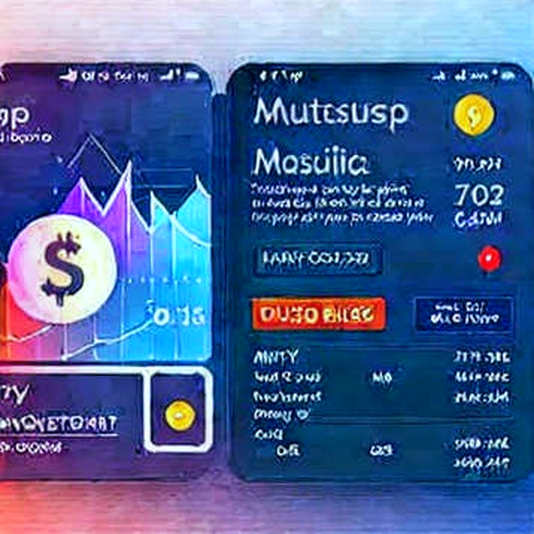
Think of a collateralized loan position. Today, its state is represented by a smart contract and a few numbers on a dashboard. Tomorrow, an AI model could generate a real-time “health card” image that includes the loan-to-value ratio, liquidation price, interest rate, and a visual risk indicator—all rendered within a consistent layout. This image can be minted as an NFT that verifies the state at a specific block, creating a new form of provable, visual oracle output. The model’s ability to handle complex tables and formulas makes it a natural fit for DeFi user interfaces that are both functional and truly on-chain.
But the systemic contagion mapper in me sees a darker path. The model is served by Alibaba Cloud. Every request goes through a centralized inference endpoint. If this becomes the de facto engine for generating on-chain visual content, we create a single point of failure. A censorship decision, a pricing change, or a technical outage could freeze the ability to mint or update these dynamic NFTs. The composability is real—but so is the dependency risk. We are trading one form of centralization (the art gallery, the marketplace) for another (the inference API, the cloud provider).
Let’s look at the numbers. Over the past 90 days, the NFT market has seen a 65% decline in trading volume on major chains, but the number of minted assets with embedded metadata has grown by 180%. The trend is moving toward utility NFTs—tickets, certificates, access passes. Qwen-Image-3.0 directly enables this by making layout-as-a-service cheap and accessible. But if every such asset requires a call to a central server to generate its image, we are building a house of cards. Algorithms don’t fail; models do. And when the model goes down, the visual layer of those NFTs simply disappears.
Contrarian: The Decoupling Thesis The prevailing narrative is that AI image models will democratize NFT creation and drive the next wave of mainstream adoption. I am skeptical—not about the capability, but about the alignment of incentives. The true value in crypto lies in permissionless, trust-minimized systems. Qwen-Image-3.0 is a proprietary model embedded within a cloud ecosystem. Its terms of service, content moderation policies, and availability are determined by a single corporate entity. This is not a tool for a decentralized creator economy; it is a tool for a centralized platform economy that happens to use blockchain as a settlement layer.
Here is the contrarian angle: The market is underestimating the potential for a decentralized AI inference network—like Render, Akash, or a yet-unbuilt zk-ML protocol—to capture the high-value, high-complexity layout generation market. Why? Because for a DeFi dashboard NFT or a verifiable governance report, the user cares about the integrity of the image, not just its beauty. They need to know that the image was generated from the exact on-chain data, without tampering or quality degradation. A centralized model cannot provide cryptographic proof of its inputs and outputs. A decentralized inference protocol that runs on a verified model with zk-proofs of correct execution can. That is the moat.
My own experience in modeling systemic risks during DeFi Summer 2020 taught me that composability without auditability is a recipe for contagion. The same principle applies here. If the image generator becomes a critical part of the NFT infrastructure, we need to be able to audit its behavior—which outputs were generated from which inputs, and whether the model was modified. Qwen-Image-3.0 offers none of that transparency. It is a black box dressed as a white paper.
Takeaway: Cycle Positioning We are in a sideways market. Chop is for positioning. The launch of Qwen-Image-3.0 is not a signal to rush into Alibaba-related tokens or NFT collections. It is a signal to watch two things: first, the adoption of on-chain data-visualization NFTs (are they being integrated into DeFi protocols?), and second, the development of decentralized alternatives that can match this model’s layout capability while offering verifiability.
The bubble burst on the idea that AI would save NFTs. The lessons remain: trust is the new currency. And the most valuable assets on-chain will be those that prove their own generation process. Qwen-Image-3.0 shows us what’s possible. The crypto-native version will show us what’s truly trustworthy.

Composability is a double-edged sword. The cutting edge of this sword is now nine cells in a perfect grid, each with a 10-pixel font. But the edge that cuts us—the one that ties our on-chain content to a single cloud API—is just as sharp. Algorithms don’t fail; models do. And when the Alibaba Gateway goes down, we will remember that cross-border payments (and cross-border content) are only evolving if the infrastructure is owned by the many, not the few.