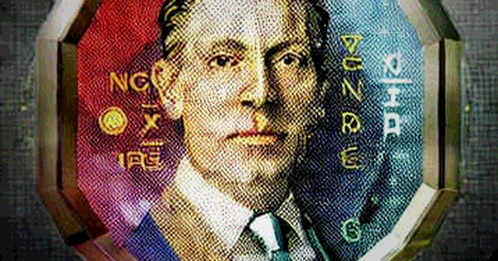
There is a moment in every cycle when the market stops listening to the code and starts listening to the voice. Michael Saylor, the founder of Strategy, has become that voice for Bitcoin—a high priest of the digital gold narrative, delivering sermons that echo through trading desks and boardrooms alike. His latest pronouncement, that Bitcoin's true breakthrough lies in converting economic resources into digital form and connecting them securely, is not new information. It is a reaffirmation of a creed. But in a sideways market, where chop is the only constant, reaffirmation carries its own weight. We are not looking for new facts; we are looking for new conviction.
I have spent the better part of two decades in this industry, first as a cryptography researcher in Singapore, then as a community builder in Ho Chi Minh City. I have audited smart contracts that could have drained millions, and I have watched narratives collapse under the weight of their own hubris. What strikes me about Saylor's rhetoric is not its accuracy—Bitcoin's technical properties are well-documented—but its function. He is not describing a technology; he is constructing a theology. And the market, hungry for meaning in a period of low volatility, is consuming it with reverence.
Let us examine the technical foundation beneath the sermon. Bitcoin is a Layer 1 consensus network, securing a ledger that has operated without interruption for over fifteen years. Its security model relies on proof-of-work, a mechanism that demands real-world energy expenditure to achieve Byzantine fault tolerance. This is not a new insight, but it is worth revisiting in the context of Saylor's framing. When he speaks of converting economic resources into digital form, he is pointing to the immutable scarcity of 21 million coins—a hard cap that no governance proposal can alter. The network processes roughly seven transactions per second, a figure that pales in comparison to Solana or Ethereum. Yet Saylor does not sell performance; he sells permanence. In my own audit experience, I have seen countless protocols optimize for throughput while neglecting the more fundamental property of trust. Bitcoin's genius is that it does not need to be fast; it needs to be final. The ten-minute block time is not a bug; it is a feature, a deliberate pace that prioritizes settlement assurance over user convenience.
The tokenomics of Bitcoin are equally stark in their elegance. There is no team allocation, no pre-mine, no treasury. The distribution is a pure function of mining rewards, halving every four years, ensuring that no central authority can dilute the supply. This is the industry's benchmark for fair launch, and it is the foundation of Saylor's value proposition. He is not selling a yield; he is selling a store of value. The value capture mechanism is not protocol revenue but price appreciation driven by adoption and scarcity. In a world of fiat debasement, this is a compelling argument. But it is also a fragile one, dependent on the continued belief of market participants. I have seen this movie before, in the ICO boom of 2017, when projects promised revolutionary utility and delivered only empty tokens. Bitcoin is different, of course—it has no promise to break. But the narrative that surrounds it is still a human construct, subject to the same psychological forces that drive all markets.
Here is where I must offer a contrarian perspective. Saylor's vision of Bitcoin as a global settlement layer, connecting individuals, corporations, and even nation-states, is aspirational. But it glosses over a critical tension: the concentration of hash power. After the fourth halving, miner revenue has collapsed, and the economic pressure to consolidate is immense. If hash power concentrates in three or four major pools, the decentralization that underpins Bitcoin's security becomes a fiction. We are not there yet, but the trend is visible. Governance is not a vote; it is a vigil. We must watch the distribution of mining power with the same vigilance we apply to our own private keys. Saylor's sermon does not address this risk, and its omission is telling. He is selling a story of sovereign money, but the infrastructure that supports it is increasingly centralized. This is not a reason to abandon Bitcoin, but it is a reason to temper our enthusiasm with clear-eyed analysis.
The market impact of Saylor's statements is real but muted. He is a known quantity, a maximalist whose position has been priced in for years. His words do not move the needle on price; they reinforce the narrative. In a sideways market, this reinforcement is valuable. It provides a psychological anchor for investors who are otherwise adrift. But it also creates a risk of cognitive bias. When we rely on a single KOL to validate our positions, we surrender our own agency. I have seen this dynamic play out in the DeFi summer of 2020, when charismatic leaders drove communities toward decisions that were not in their long-term interest. The protocol must serve the human spirit, not the other way around. We must hold space for the digital soul, but we must also hold ourselves accountable for the choices we make.
Looking forward, I see two potential paths. The first is the continued institutionalization of Bitcoin, driven by voices like Saylor, leading to broader adoption and stability. The second is a reckoning with the centralization risks that lurk beneath the surface. Both paths are possible, and neither is predetermined. What matters is how we, as a community, respond. We build bridges from the ashes of belief, but we must ensure those bridges are anchored in reality, not just rhetoric. Truth is the only immutable asset, and it is our responsibility to seek it, even when the sermons are comforting. The market will eventually reward those who listen to the silence between the blocks, who hear the whispers of risk beneath the chorus of conviction. Decentralization is a practice of radical empathy—empathy for the user, for the miner, for the skeptic. It is not a slogan; it is a discipline. And in that discipline, we find the true value of this experiment we call Bitcoin.